
Wagyu, explained
American Wagyu
The Wagyu ancestry in American herds traces to a small founder population exported from Japan before live exports ended. Many American Wagyu programs also use another breed, commonly Angus. Reading the label means separating documented breed status and producer information from marbling or marketing tiers.
A very small founding herd
The US herd starts with four bulls, two black and two red, imported by Morris Whitney. The American Wagyu Association dates that to 1975; other industry bodies say 1976. The four animals are not in dispute, the year mildly is, and the precise Japanese bloodlines behind them are repeated inconsistently enough that we do not print them.
A second wave followed in the 1990s: semen from 1991, live animals from 1993, and further shipments until Japan stopped exporting in 1997. The founder population was limited. Crossbreeding with breeds such as Angus became one model, while fullblood herds also developed from imported genetics.
The words that are actually defined
American Wagyu may be fullblood, purebred, or crossbred, so the useful question is the documented breed status. In its USDA-hosted specification for approved branded-beef programs claiming Wagyu influence, the American Wagyu Association uses three tiers that are not interchangeable:
- Fullblood
100% Wagyu, registered and DNA parent-verified to both sire and dam.
- Purebred
93.75% minimum under the scoped specification. Also DNA parent-verified. Not a synonym for fullblood.
- Wagyu influence / American Wagyu
Traceable to at least one registered fullblood or purebred parent under the scoped AWA specification. Supporting records can differ from the DNA verification required for its fullblood and purebred tiers.
F1 usually means a first-generation cross, commonly Wagyu with Angus, but it is not a synonym for every crossbred or Wagyu-influence product. Ask which parents and records support the seller’s usage.
There is no USDA Wagyu grade
This is the single most misunderstood thing about American Wagyu. The US grades all beef on its general quality scale. Prime is the highest named grade, but the Prime category has a minimum rather than a maximum amount of marbling. There is no Wagyu-specific USDA quality grade. Breed claims on federally inspected labels are still subject to substantiation and false-or-misleading-label rules.
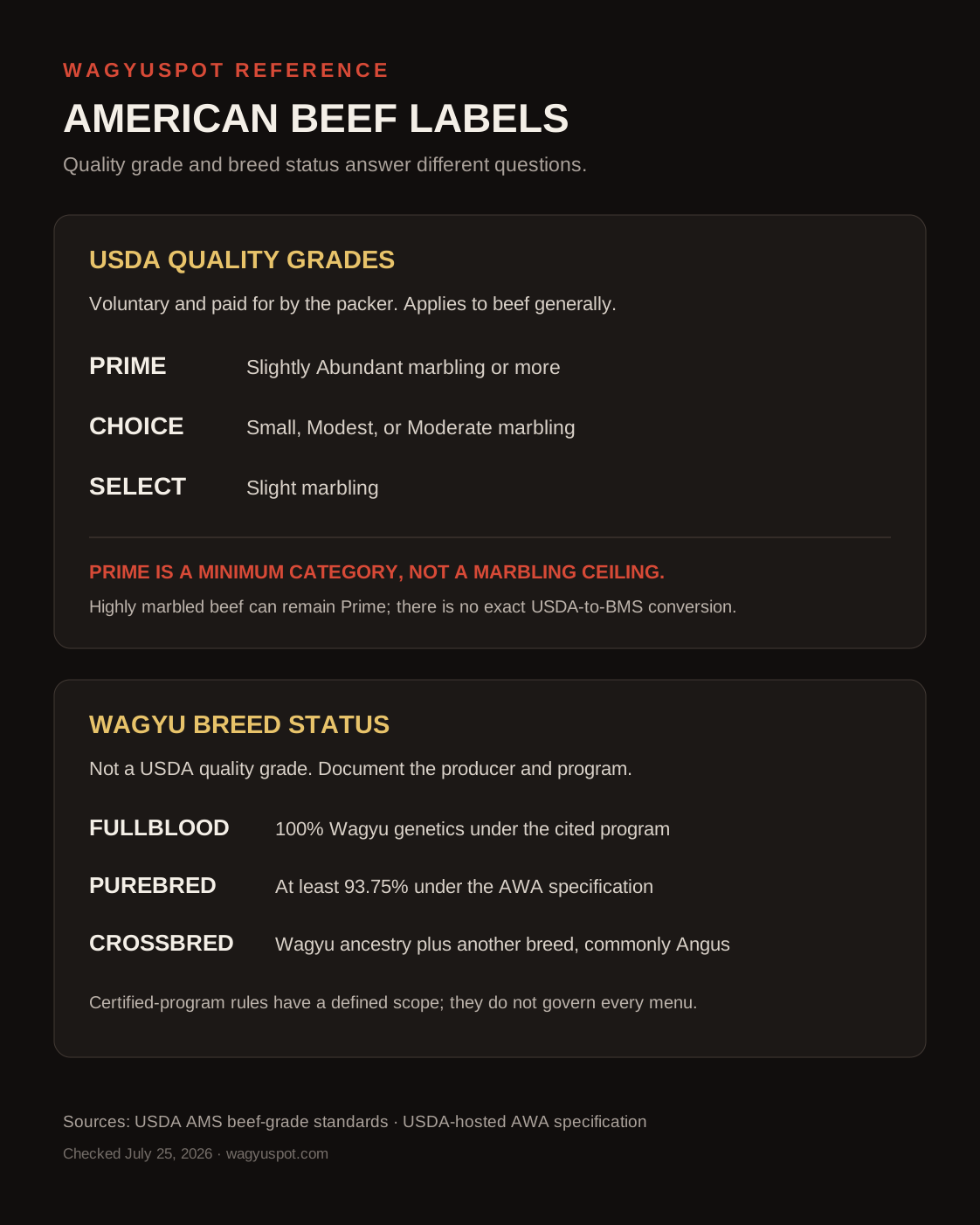
USDA grading is also voluntary and paid for by the packer, so the absence of a shield does not by itself mean lesser beef. Prime can overlap highly marbled Wagyu, and there is no exact conversion between USDA grades and Japan’s BMS. Producers often add their own marbling tiers, which leads directly to the next distinction.
Marbling tiers are not lineage
Producer grades describe fat. They say nothing about how much Wagyu is in the animal, and conflating the two is the most common error on American steakhouse menus.
Snake River Farms is one public example. Its own material, checked July 25, 2026, defines Black at BMS 6 to 8 and Goldat BMS 9 to 10. The company separately describes its American Wagyu as 50 percent Wagyu. A menu reading “SRF Gold Wagyu” has therefore named a producer and marbling tier; Gold itself is not the ancestry statement.
This is why our listings award an American breed badge only when a producer’s own material documents a generation. A marbling tier never earns one.
Akaushi, and what 'certified' means here
Akaushi is the Japanese Brown breed. U.S. producer histories trace an important group of Akaushi cattle to Texas imports in the 1990s; exact founder counts and herd claims should be read as attributed producer history unless supported by registry records.
One distinction is worth being exact about. “Certified Akaushi Beef” is HeartBrand’s own brand, not the Kobe association’s kind of regional certification. Its requirements are published by the company and should be checked against the current written program. It is a different kind of claim from Certified Kobe, which is granted by an outside body.
Common questions
- Is American Wagyu real Wagyu?
- American Wagyu can carry documented Wagyu ancestry and may be fullblood, purebred, or crossbred, commonly with Angus. Japan's domestic Wagyu definition covers four recognized breeds and permitted crosses among them, so an Angus cross does not fit that definition. Check the producer and breed status rather than treating all American Wagyu as one composition.
- What does fullblood mean in American Wagyu?
- In the American Wagyu Association's USDA-hosted specification for approved branded programs, fullblood means 100 percent Wagyu with AWA registration and DNA parent verification to both parents. Purebred is at least 93.75 percent under the same specification. Its broader Wagyu-influence tier traces to at least one registered fullblood or purebred parent.
- Is there a USDA grade for Wagyu?
- There is no Wagyu-specific USDA quality grade. Prime is the highest named USDA quality grade, but it is a minimum category rather than a marbling ceiling. Wagyu breed claims on federally inspected labels must still be truthful and substantiated. A BMS-style number on American beef is a producer or program measure, not a USDA grade.
- What is Snake River Farms Gold?
- A marbling tier, not a breed generation. On its site checked July 25, 2026, Snake River Farms defines Black as BMS 6 to 8 and Gold as BMS 9 to 10, while separately describing its American Wagyu as 50 percent Wagyu. The tier identifies marbling, not ancestry.
- What is Akaushi beef?
- Akaushi is the Japanese Brown breed. U.S. producer histories trace an important group to Texas imports in the 1990s. Certified Akaushi Beef is a HeartBrand program rather than the Kobe association's kind of regional certification, so evaluate it against the company's current written requirements.