
Wagyu, explained
What is Wagyu?
Wagyu means Japanese cattle and, in Japan, refers to four recognized breeds and permitted crosses. It is not a cut, grade, or single brand. Many Wagyu lines are known for their capacity to develop fine intramuscular fat, but ancestry, origin, grade, and marbling are separate facts. Here is how the Japanese, American, and Australian contexts differ.
The word, literally
Wa means Japanese, gyu means cattle. Four Japanese breeds qualify, but in practice one dominates:
- Japanese Black
Kuroge Washu, which accounts for more than 90 percent of Wagyu raised in Japan and is required by many exported regional brands, including Kobe and Miyazaki.
- Japanese Brown
Akaushi, or Red Wagyu, leaner and slightly less marbled, raised in Japan and, via imported genetics, in Texas.
- Japanese Shorthorn & Polled
Two small-production breeds that are generally leaner and less marbled than Japanese Black.
Why it eats differently
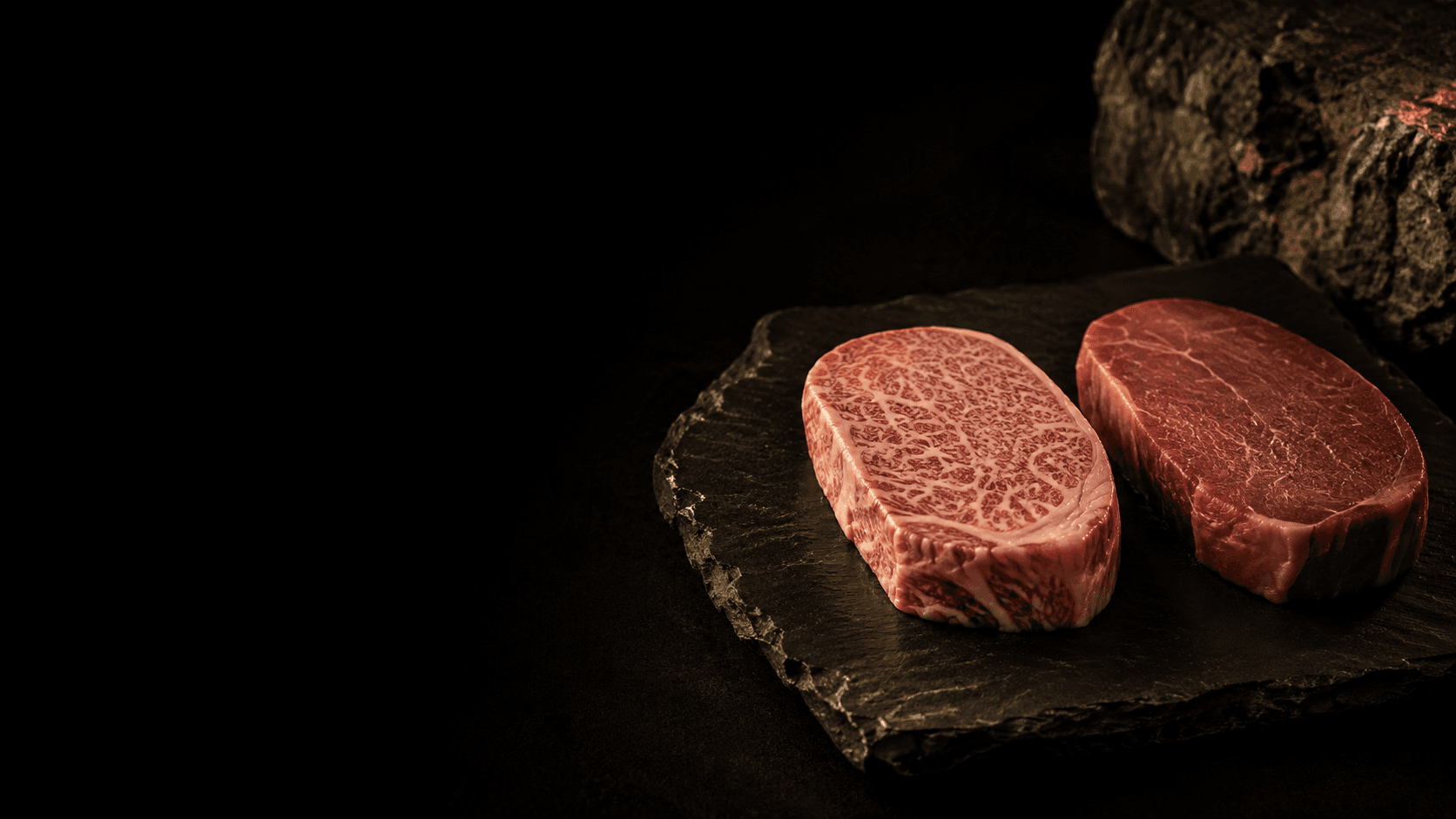
All beef can contain fat within the muscle, which is the marbling used in ordinary grading. Many Wagyu lines are selected for a greater amount and finer distribution of that intramuscular fat. Wagyu fat also tends to soften at a lower temperature, so a properly cooked bite can feel unusually yielding. Two things influence it: genetics that predispose the breed to marble, and feeding and management that affect expression. Neither the ancestry claim nor the feeding program alone predicts the marbling in a particular cut.
What the fat is made of is the reason for that softness. The largest share of the fat in Wagyu is oleic acid, a monounsaturated fatty acid, and in a higher proportion than in most other beef. Fats richer in it soften at lower temperatures, which is the mechanism behind the texture people describe as melting, and it is also why Wagyu is easy to overcook and why thin slicing suits it.
Be careful with the next step in that argument. It is often claimed that oleic acid is what gives Wagyu a distinctive umami or sweetness, and that is marketing rather than settled science. The fatty-acid profile is measurable and real; the flavour claim built on top of it is not established, and this site does not repeat it. A precise melting-point figure deserves the same suspicion: it varies by animal, by cut, and by where on the carcass the fat sat, so the exact temperatures quoted in marketing are not a standard.
The three worlds of Wagyu
This guide focuses on the three production contexts most often disclosed in U.S. listings; Wagyu genetics are also raised elsewhere. Each context uses different evidence.
Japan's four recognized Wagyu breeds and permitted crosses. Beef may carry a JMGA carcass grade, and regional brands such as Kobe add separate origin and production rules.
May be fullblood, purebred, or crossbred; many crossbred programs use Angus. Look for the producer, breed status, and any USDA grade or program standard that is actually disclosed.
From crossbred to fullblood and across a broad marbling range. Look for a named producer, breed content, and the specific Australian marbling scale used.
How it is graded
Grade describes a carcass; provenance establishes ancestry, origin, and brand. In Japan, beef is scored on yield (A, B, C) and quality (1 to 5), so A5 is the top combination, with a marbling number (BMS) inside the quality assessment. Australia uses Australian grading and marbling systems; U.S. beef may carry a USDA quality grade, while Wagyu ancestry is a separate claim. The key rule: A5 is official only for carcasses graded under Japan’s system in Japan.
Buying and eating the real thing
The word “Wagyu” alone does not disclose ancestry, origin, grade, or producer. Match the evidence to the claim: traceability and regional standards for Japanese products, breed status and producer for American programs, and the named producer, breed content, and marbling scale for Australian products. Missing detail makes a claim incomplete to the buyer; it does not by itself prove deception.
How to spot authentic Wagyu · What it costs · Browse by prefecture & brand
Common questions
- What does Wagyu mean?
- Wagyu means Japanese cattle: wa (Japanese) plus gyu (cattle). In Japan it refers to four recognized breeds and permitted crosses among them, not to a single cut or grade. More than 90 percent of Japanese Wagyu is Japanese Black.
- Why is Wagyu so marbled?
- Genetics can predispose Wagyu cattle to greater and finer intramuscular fat, while feeding and management affect how that potential develops. The amount and distribution still vary by breed, bloodline, animal, grade, and cut.
- Is all Wagyu from Japan?
- No. Japan defines Wagyu through four recognized breeds and permitted crosses, while Wagyu genetics are also raised in the U.S. and Australia under different breed, labeling, and grading systems. American Wagyu is commonly crossed with Angus; Australian products span crossbred through fullblood programs.
- Is Wagyu healthier than regular beef?
- Do not treat Wagyu as a health claim. Nutrition varies by cut, trim, grade, and serving size, and highly marbled cuts are energy- and fat-dense. Use the product's nutrition information and your own dietary guidance rather than assuming ancestry makes the beef healthier.
- How should I cook Wagyu?
- Method depends on the cut, thickness, and marbling. Thin, highly marbled slices are commonly seared briefly; thicker steaks need time and temperature appropriate to their size. For safety, USDA recommends 145F plus a three-minute rest for whole beef steaks and 160F for ground beef.