
Wagyu, explained
Australian Wagyu
Australian Wagyu products may disclose breed content, producer, and one or more marbling measures. The scale behind any number matters because AUS-MEAT, MSA, and proprietary brand scores are not interchangeable.
Two scales, and they do not convert
Australia uses two separate marbling measures, scored on different criteria. A single cut can carry both numbers, and neither translates into the other.
- AUS-MEAT marble score
0 through 9, whole numbers, judging the amountof marbling. Current instrument standards identify 7 through 9 as high marbling. Industry materials may still use “9+” as shorthand, so the named standard matters.
- MSA marbling
100 to 1190, in steps of ten, judging amount and distribution and the size of the fat pieces. Finer, and rarely printed on a menu.
An Australian product advertised as MB 11 or MB 12is not reporting the current official AUS-MEAT 0 through 9 score. It may be using a named proprietary or extended camera scale, or making a comparison to another system. Ask which standard produced the number rather than assuming it is Japan’s BMS.
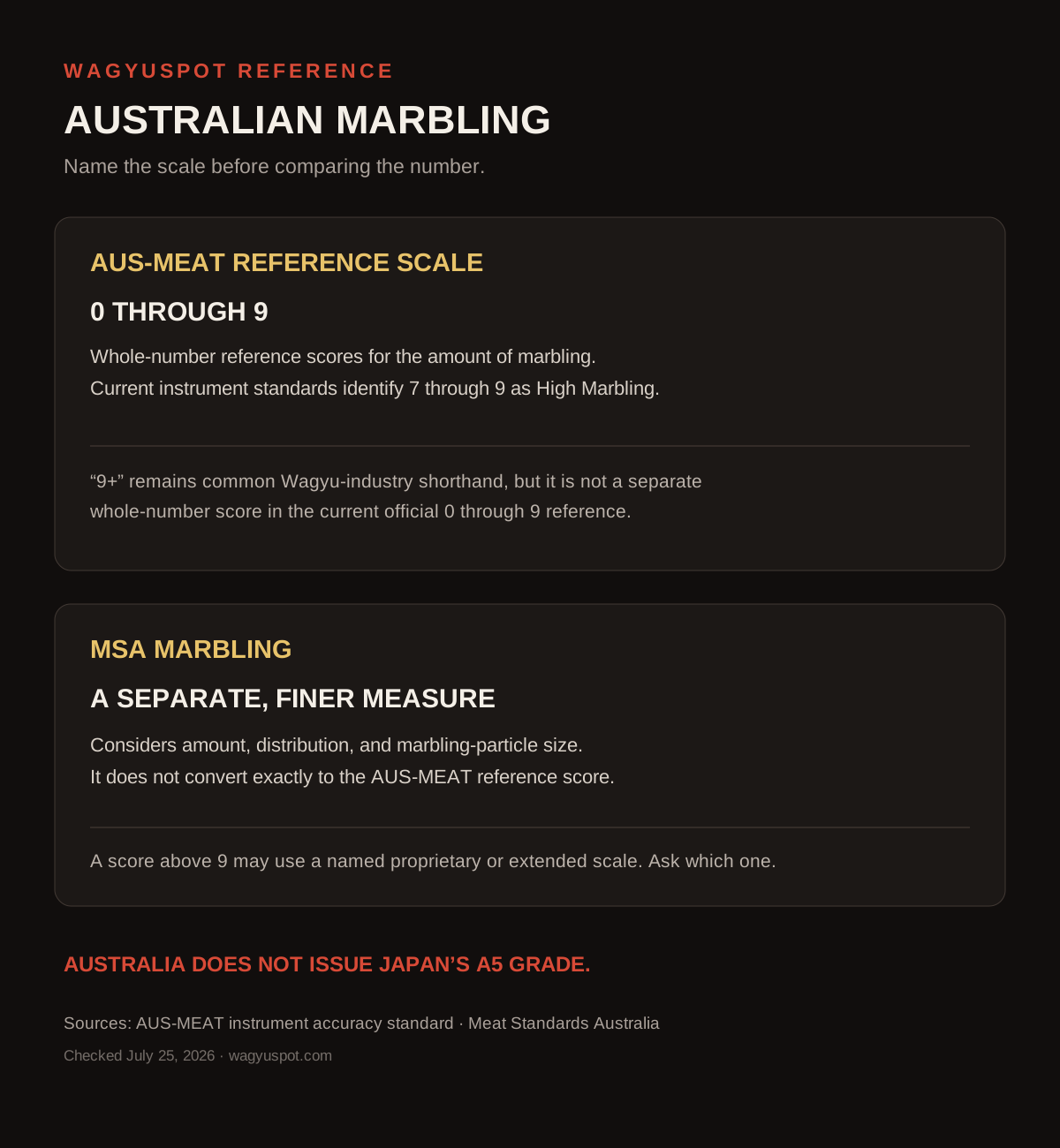
Australia does not issue A5
A5 is a Japanese grade, issued under Japan’s system for carcasses graded in Japan. Australian systems do not award that official grade.
When it appears next to Australian beef, ask whether it is merely an informal comparison. It should not be represented as an official grade issued to the Australian carcass.
Crossbred and fullblood programs
Australian Wagyu spans crossbred through fullblood programs. Breed content is a separate fact from marbling, so an upper-band score does not establish fullblood ancestry and a fullblood claim does not establish a particular score.
Both models can be documented. Look for current pedigree or breed-content information from the producer or the relevant program rather than inferring it from country or price.
The producers you will actually see
Producer names create a useful path to current specifications. The examples below appeared repeatedly in directory records and were checked against producer materials on July 25, 2026:
- Westholme: crossbred
Westholme describes its Wagyu as an F1 cross of fullblood or purebred Wagyu males with its Mitchell female cattle. That specification belongs to the Westholme program, not to Australian Wagyu generally.
- Stone Axe: fullblood
Stone Axe states that its Wagyu herd maintains 100 percent fullblood Japanese Black genetics.
- Carrara: crossbred
Kilcoy Global Foods describes Carrara as an F1/F2 crossbred program using fullblood sires, with a stated minimum grain-feeding period of 350 days.
- Blackmore: fullblood
Blackmore describes its program as 100 percent fullblood Wagyu. Treat its supply-chain and feeding descriptions as producer claims tied to that program.
- Other named programs
Producers can operate multiple cattle lines. A company name alone may not distinguish Wagyu from Angus or fullblood from crossbred, so match the menu or product to the current line specification.
Feeding periods vary by program and lot rather than by national rule. Treat a stated number of days as a producer claim for the specific product, not as the definition of Australian Wagyu or a guarantee of its marble score.
Halal, precisely
Australia has a government-supervised halal red-meat export framework, and some Australian Wagyu is halal certified. The detail that matters is where the certification attaches: to the establishment and the consignment, under a government-supervised program with certification by recognised Islamic bodies. It does not attach to “Australian Wagyu” as a category.
So halal status has to be verified per product, and it can be broken downstream by handling. The Australian Wagyu Association is a breed body, not the product’s halal certifier. Look for the certifier and current certificate covering the facility and product, not the breed body. Halal Wagyu, in full
Common questions
- What does MB9 mean in Australian Wagyu?
- MB or MS usually identifies a marble score, but the scale must be named. The current AUS-MEAT reference scale uses whole-number scores 0 through 9, with 7 through 9 identified as high marbling. Some Wagyu brands use 9+ as commercial shorthand or publish an extended proprietary score, so do not assume every MB number is an official AUS-MEAT score.
- Can Australian Wagyu be A5?
- Not as an official grade. A5 is issued under Japan's system for carcasses graded in Japan. Australian systems do not issue it, so A5 on Australian beef can only be an informal comparison and should not be read as an official Australian or Japanese grade for that carcass.
- What is the difference between AUS-MEAT and MSA marbling?
- They are separate measures. The current AUS-MEAT reference scale uses scores 0 through 9. MSA marbling uses a finer numerical scale and considers amount, distribution, and particle size. They do not convert exactly, so a product may report both.
- Is Australian Wagyu fullblood or crossbred?
- Both exist, and there is no single breed composition for Australian Wagyu. Current producer materials identify Westholme as an F1 cross program and Stone Axe and Blackmore as fullblood programs. Check the exact product and current program specification rather than inferring breed content from country or marbling score.
- Is Australian Wagyu halal?
- Often, but it must be checked per product rather than assumed. Australia certifies halal at the establishment level under a government-supervised program, so status attaches to the processing plant and the consignment, not to Australian Wagyu as a category. The Australian Wagyu Association is a breed registry and does not certify halal.
Primary references
- AUS-MEAT instrument standards for the 0 through 9 reference scale
- Australian Wagyu Association breed-content descriptors and industry terminology
- Australian government halal red-meat export requirements
- Westholme breed-program FAQ
- Stone Axe Pastoral Wagyu genetics
- Kilcoy Global Foods Carrara program specification
- Blackmore Wagyu program description