
Regional brand · Niigata
Snow-Aged Wagyu
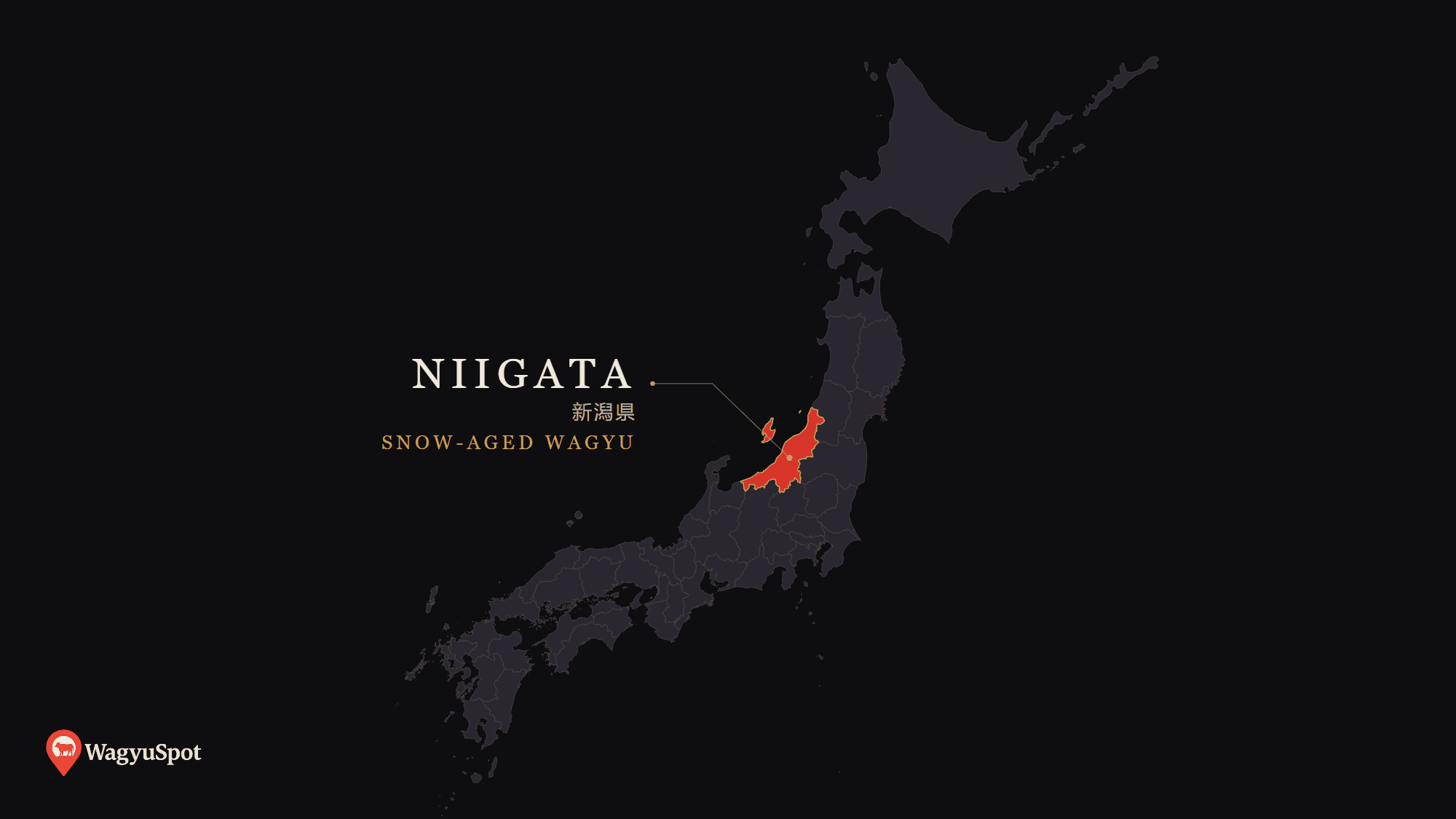
Niigata Wagyu snow-aged in a traditional snow cellar (yukimuro) for a deeper, tenderized flavor.
- Region
- Niigata (snow country)
- Method
- Yukimuro snow-cellar aging
- Conditions
- Near freezing, high humidity
- Character
- Tender, heightened umami
Aging in snow
Snow-Aged Wagyu is defined not by a place of birth but by a technique. In Niigata's deep snow country, producers use a yukimuro, a traditional snow cellar packed with snow that holds a room at close to freezing with very high humidity. Aging Wagyu this way for around a month tenderizes the meat and heightens its umami and sweetness as proteins break down into free amino acids.
Yukimuro storage is a centuries-old Niigata practice for preserving food through the winter. Its modern application to Wagyu is a specialty of Niigata producers, most prominently the Niigata City company Uoshoku, which began selling snow-aged Wagyu in 2012.
How to order it with confidence
A well-documented offering names Niigata, the yukimuro or snow-aging process, and the base beef's grade. Snow-aging is a finishing method, not a substitute for ancestry, origin, or grade.
Where to eat it1
Where to buy it2
Holy Grail Steak Co.
Japanese A5 (Kobe, Ogata, Omi, Takamori, Miyazaki, Kagoshima, Sendai), American (Tajima, Akaushi), Australian (Carrara)
Allen Brothers
Japanese A5 (Snow Aged), American Wagyu (Rosewood Ranches Texas Wagyu), Australian Wagyu (Westholme, Stone Axe)
Common questions
- Is snow-aged Wagyu the same as Hokkaido Snow Beef?
- No. Snow-aged Wagyu is an aging method carried out in Niigata's snow cellars. Hokkaido Snow Beef is a separate product whose name describes the snowflake-like look of its marbling, not any aging in snow.
Looking for the U.S. ranches that raise Wagyu? See the farms · The Kobe list · How to spot authentic Wagyu