
Cut
Harami / skirt
ハラミ・サガリ · a diaphragm muscle, not a primal
Harami is the cut on this list that is not, by Japanese classification, a cut of beef at all, and the reason is worth knowing before you order it.
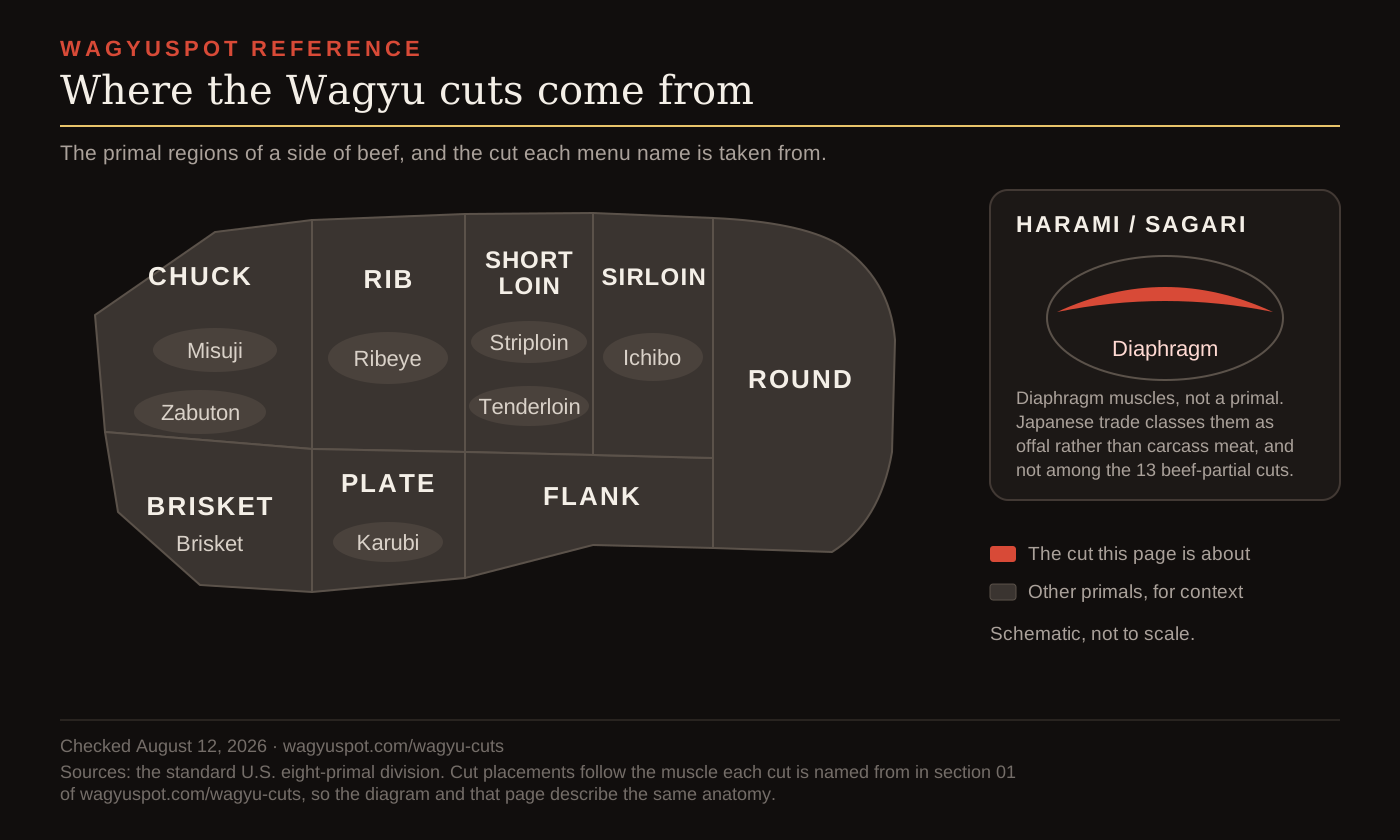
Two muscles, not one cut
ハラミ and サガリ are frequently treated as interchangeable and they are two different muscles. Harami is the costal diaphragm. Sagari refers to the crura, the pillars of the diaphragm, and is commonly compared with the cut sold in the United States as hanger steak. A menu that distinguishes them is being precise; one that uses harami for both is doing what most menus do.
Both are the diaphragm, the sheet of muscle separating the chest cavity from the abdomen. That is a working muscle with a distinctive grain and a deeper, more mineral flavour than the loin cuts, which is why it has a devoted following rather than a mainstream one.
Why it is classified as offal
This is the part that surprises people. Japanese trade classification treats the diaphragm cuts as offal rather than as carcass meat, and they do not appear among the 13 standard beef-partial cuts. That is a classification fact about how the trade divides an animal, not a judgement about quality, and it has a practical consequence: harami sits outside the framework that the other cuts on this site are described by.
It is also why the diagram on this page shows harami apart from the body rather than as a region on it. Drawing it as a primal would be a tidier picture and it would be wrong, and a diagram that contradicts the classification it is illustrating is worse than no diagram.
What that means when you buy it
Because it is not carcass meat in the Japanese scheme, the usual grading vocabulary sits awkwardly on it. A carcass grade describes the animal, and the marbling behind that grade was read at a cross-section through the rib, so quoting A5 on a diaphragm cut is even further from a measurement of the thing in front of you than it is on a tenderloin.
The claims worth asking for are origin and the specific muscle. A seller naming sagari rather than harami, or naming the animal's origin and programme, is telling you more than one leaning on a grade. Harami is usually served thin-sliced for grilling, so the usual yakiniku cautions apply: cook to the USDA guidance for whole beef steaks, 145F with a three-minute rest, and keep raw-meat utensils away from cooked food.
Where harami / skirt is on the menu
Venues whose Wagyu menu named this cut when we read it. A listed cut may not be on tonight, and this is a menu reading rather than a sourcing verdict.
48 venues
J&G Steakhouse
Scottsdale, AZ
Toca Madera - Scottsdale
Scottsdale, AZ
Manpuku Japanese Yakiniku BBQ Dining - Torrance
Torrance, CA
Stake Chophouse & Bar
Coronado, CA
Tamaen
Lomita, CA
Tsuruhashi Japanese BBQ - San Diego
San Diego, CA
Wagyu Butcher
Torrance, CA
Bardea Steak
Wilmington, DE
1000 North
Jupiter, FL
Bae Korean Grill
Hollywood, FL
Mandalay Prime Steakhouse & Lounge
Clearwater, FL
Takato (Conrad Fort Lauderdale Beach)
Fort Lauderdale, FL
Zuma Miami
Miami, FL
Kevin Rathbun Steak
Atlanta, GA
Nakato Japanese Restaurant
Atlanta, GA
Wagyu House Atlanta
Atlanta, GA
The Boise Post
Boise, ID
Benny's Chop House
Chicago, IL
Ithaki Estiatorio
Chicago, IL
Chemin a la Mer
New Orleans, LA
Uni
Boston, MA
Zuma
Boston, MA
MOA Korean BBQ & Bar
Charlotte, NC
The Boiler Room
Omaha, NE
Where to buy harami / skirt
Sellers whose own storefront lists this cut, named as they name it. Verified sellers that ship nationwide, checked August 12, 2026. A sample rather than a complete market survey, and nothing here is paid or ordered by commission.
Some links to sellers are affiliate links; we may earn a commission at no extra cost to you. Learn more.
- Plum Creek Wagyu
Outside Skirt Steak - Wagyu Beef
- Allen Brothers
Westholme Australian Wagyu Hanger Steak
- Pursuit Farms
Australian Wagyu (50/50 Wagyu Angus) hanger steak 8oz x 4
Common questions
- Is harami the same as skirt steak?
- They are often equated on English menus and it is loose. Harami is the costal diaphragm, and the closest common U.S. comparison for sagari, the other diaphragm muscle, is hanger steak. American skirt steak also comes from the diaphragm region, so the comparison is reasonable without the names matching exactly.
- Why is harami classified as offal?
- Japanese trade classification treats the diaphragm cuts as offal rather than carcass meat, and they are not among the 13 standard beef-partial cuts. It reflects how the trade divides an animal rather than any judgement about quality or desirability.
- What is the difference between harami and sagari?
- They are two different diaphragm muscles. Harami is the costal diaphragm; sagari is the crura, the pillars, and is the one usually compared with hanger steak. Many menus use harami loosely for both.
- Can Wagyu harami be graded A5?
- The carcass can be, but the grade is a statement about the animal, read at a cross-section through the rib. Since the diaphragm is not classified as carcass meat at all in the Japanese scheme, a grade quoted on harami is further still from describing the piece you are buying.
All Wagyu cuts, decoded · How to cook it · How the A5 grade is built